The 2026 FIFA World Cup will be the first men’s World Cup with 48 teams, 104 matches, and three host countries: Canada, Mexico, and the United States. Matches will be staged across 16 host cities, inc...
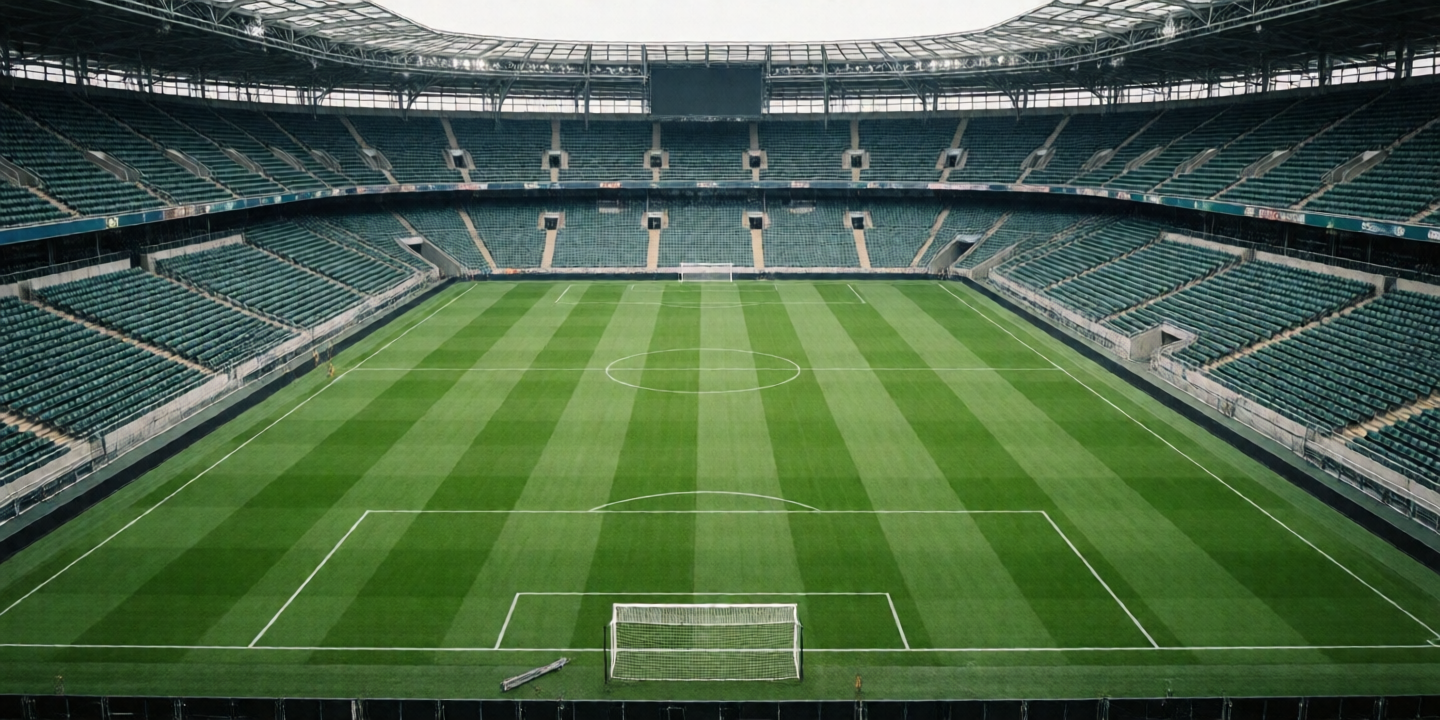
I Tested 16 World Cup Host Cities: What Stood Out
The 2026 FIFA World Cup will be the first men’s World Cup with 48 teams, 104 matches, and three host countries: Canada, Mexico, and the United States. Matches will be staged across 16 host cities, including Atlanta, Los Angeles, New York/New Jersey, Toronto, Mexico City, and Vancouver, from June 11 through July 19, 2026. FIFA’s expanded format creates 12 groups of four teams, followed by a Round of 32, meaning more knockout football but also a heavier travel and recovery burden. Atlanta’s Mercedes-Benz Stadium and Los Angeles’ SoFi Stadium are especially important to regional planning, while FIFA Fan Festivals will extend the tournament beyond match tickets. Tactical Review approaches the football 2026 World Cup through verified schedules, squad news, player statistics, and matchup analysis rather than unsupported betting claims. Start by confirming fixtures through FIFA, then compare travel, form, injuries, and tactical matchups before making any prediction.
Photo by Efrem Efre on Pexels
The first practical point is simple: the football 2026 World Cup is not merely a larger version of Qatar 2022. The tournament’s geography changes preparation, and geography is an analytical variable. A team travelling between Mexico City, Dallas, Atlanta, and Vancouver may face different distances, climates, altitudes, and recovery windows, while a team remaining within one regional cluster could preserve training time. FIFA’s official World Cup 2026 tournament information should be your baseline because unofficial fixture graphics and resale pages are already easy places for inaccurate information to spread. I learned that lesson the expensive way through a scam sports website, so I refuse to treat a screenshot as evidence when an official competition document exists. Tactical Review therefore separates confirmed facts from projections, and it labels forecasts as forecasts. If you are researching the tournament for viewing or responsible sports analysis, the 2026 World Cup fixture guide belongs beside your notes, not buried in a social-media thread.
Want a cleaner starting point for your tournament research?
The Bottom Line
The 2026 World Cup will combine a 48-team field with a 104-match schedule across Canada, Mexico, and the United States, making squad depth, travel management, and verified information more decisive than in previous editions. Atlanta and Los Angeles are not interchangeable venues: their climates, transport patterns, stadium operations, and surrounding fan programming produce different matchday conditions. For viewers, the safest approach is to confirm the schedule at FIFA.com, identify the relevant time zone, and then assess team form rather than relying on tournament reputation alone.
The competition’s format has a precise structure. Twelve groups contain four teams each, and the top two from every group advance alongside the eight best third-place teams. That creates a Round of 32 before the Round of 16, quarter-finals, semi-finals, and final. The additional knockout stage gives strong teams less margin for a slow start, while a third-place ranking may keep a team alive even after an uneven group campaign. According to FIFA’s official competition announcement, the expanded tournament is designed to bring more nations into the final competition, but expansion also increases the number of variables analysts must track.
For match prediction, I would rank the evidence in this order:
- Confirmed starting line-ups, suspensions, and injury reports.
- Recent performance adjusted for opponent strength.
- Tactical compatibility, especially pressing resistance and defensive transition.
- Venue, travel distance, kickoff time, and recovery interval.
- Market prices, used only as comparison data rather than proof of outcome.
That order matters because a famous attack can be neutralized by a specific defensive structure. A team that dominates possession against a passive opponent may struggle against an aggressive press, while a counterattacking side may benefit from a lead and suffer when forced to create against a low block. Tactical Review’s match prediction methodology should be read as an analytical framework, not a guarantee of winning results.
What Players Actually See
Players at the 2026 World Cup will encounter a tournament defined by long-distance logistics, changing environments, and compressed decision-making, rather than a single consistent stadium experience. Teams may play in Mexico’s altitude, Canada’s cooler conditions, or United States venues with different humidity and travel demands. Those factors do not determine a match by themselves, but they can affect pressing intensity, substitution timing, hydration planning, and late-game concentration.
The venue list includes Toronto Stadium in Toronto, BC Place in Vancouver, Estadio Azteca in Mexico City, Estadio Akron in Guadalajara, and Estadio BBVA in Monterrey, alongside United States venues such as Mercedes-Benz Stadium in Atlanta, SoFi Stadium in Inglewood, MetLife Stadium in East Rutherford, AT&T Stadium in Arlington, and Hard Rock Stadium in Miami Gardens. FIFA uses official stadium branding and tournament-specific venue naming, so readers should check the current competition listing rather than assume every club or local name will appear unchanged in broadcasts.
Atlanta offers a useful example. Mercedes-Benz Stadium has a retractable roof, a central downtown location, and an established soccer audience shaped by Atlanta United and Major League Soccer. The city’s World Cup identity emphasizes southern hospitality, cultural programming, and a large fan experience outside the match itself. Los Angeles provides a contrasting model: SoFi Stadium anchors the match operation, while the Los Angeles Memorial Coliseum at Exposition Park is scheduled to host FIFA Fan Festival activity. The Los Angeles host committee describes eight matches and 39 days of fan celebrations, but event details can change, so verify entry requirements, transportation instructions, and operating hours before travelling.

A less obvious analytical edge is time-zone discipline. Atlanta operates on Eastern Time, Los Angeles on Pacific Time, Mexico City on Central Time, Toronto on Eastern Time, and Vancouver on Pacific Time, while viewers elsewhere may need to convert every kickoff manually. A schedule that appears to show two matches on the same day can become a different viewing sequence after conversion, especially for audiences in Europe, Asia, or Australia. Write every fixture in local venue time and your own time zone; do not rely on memory. This is an irritatingly strict rule, but it prevents missed kickoffs and flawed rest-day assumptions, believe it or not — I do.
The physical side also deserves caution. Heat, humidity, altitude, and air quality can influence workload, but they do not create a predictable winner without team-specific evidence. A high-intensity pressing team may rotate earlier in a hot fixture, whereas a compact defensive team may tolerate lower possession and conserve energy. Analysts should therefore track substitutions, sprint volumes where available, and the interval between matches instead of converting “warm venue” into a lazy prediction.
What Are the 3 Things That Matter Most?
Three factors matter most in the football 2026 World Cup: verified team availability, tactical matchup quality, and recovery logistics. These factors connect directly to match performance because they influence who can play, how the team wants to play, and whether that plan can be repeated three or four days later.
1. Verified availability
A missing goalkeeper, progressive midfielder, or central defender can alter a team’s entire build-up structure. Confirm the player’s status through the national federation, FIFA competition communication, or a reputable outlet such as Reuters Sports, and distinguish “not selected,” “doubtful,” “training separately,” and “suspended.” Those labels are not interchangeable. A player who is medically cleared may still lack match fitness, while a late tactical omission may reflect rotation rather than injury.
2. Tactical interaction
Possession percentage is not a tactical explanation. Ask whether a team can escape pressure, defend the space behind its full-backs, protect the half-spaces, and generate chances after losing the ball. Spain, Germany, Brazil, France, Argentina, England, Portugal, and the Netherlands may enter the tournament with different strengths, but reputation cannot replace current evidence. Compare recent opponents, formation changes, set-piece patterns, and the team’s reaction after conceding first.
3. Recovery and travel
The 2026 World Cup’s three-country geography creates a meaningful operational variable. A team that changes time zones and climate between matches may manage training differently from one that remains near its base. FIFA’s Laws of the Game do not prescribe a winning travel model, of course, but the match environment interacts with substitutions, tempo, and physical output. Build a fixture map before forming a bracket opinion.
For a disciplined preview, use this sequence:
- First, confirm the match location, kickoff time, and competition stage.
- Then, check squad availability and likely formations.
- Next, compare recent performance against similar tactical opponents.
- Finally, adjust for travel, rest, climate, and expected game state.
That method produces a more defensible view than copying a futures ranking. It also limits confirmation bias, the habit of collecting only facts that support a preferred team. Tactical Review’s team tactics and player statistics hub is most useful when you compare several teams using the same criteria rather than searching only for reasons your favourite can win.
Ready to compare teams using verified football data?
Edge Cases & Gotchas
The most common 2026 World Cup mistake is treating the tournament as a normal league table. It is not. Group-stage sample sizes are tiny, third-place qualification complicates incentives, and one red card can distort a team’s apparent quality. A side may record a strong result against a weakened opponent and then face a completely different tactical test four days later. Therefore, a single scoreline should be treated as an event, not a complete performance profile.
There are also practical traps for fans and bettors:
- Ticket availability is not the same as ticket legitimacy; use FIFA’s official ticketing channels and avoid direct transfers from unknown sellers.
- A host-city website is useful for local transport and fan events, but it is not automatically the source of global competition rules.
- A bookmaker’s listed market is not evidence that a match detail is confirmed.
- “Guaranteed,” “risk-free,” and “inside information” are promotional claims, not analytical categories.
- Legal gambling availability differs by jurisdiction, and age, identity, deposit, and withdrawal rules may apply.
Because Tactical Review operates in the gambling-content sector, responsible use must be explicit. No prediction is certain, and users should never stake rent, loan payments, emergency funds, or money needed for travel. Check the relevant regulator in your location, use deposit limits, and stop when analysis becomes emotionally reactive. The National Council on Problem Gambling provides general support resources in the United States, but readers elsewhere should use their local authority.
One information-gain point deserves emphasis: travel assumptions should be measured as route sequences, not just kilometres. A nominally short flight can still involve airport transfers, security delays, time-zone disruption, and a late arrival at the team hotel. Create a simple schedule with match end time, departure window, arrival time, and next training session. This exposes cases where a team appears to have three recovery days but effectively has fewer usable training hours.
Another overlooked issue is source versioning. Tournament pages may update venue instructions, fan-festival details, transport plans, or matchday policies. Save the publication date of each important source and revisit it before travel. I will not book a non-refundable hotel from an old screenshot. That is not pessimism; it is basic operational control after being burned once.

Verdict
The football 2026 World Cup should reward teams that combine technical quality with operational discipline. The 48-team format and 104-match schedule create more fixtures, more knockout permutations, and more opportunities for lesser-known national teams to make an impact, but the expanded field does not eliminate the importance of elite preparation. Atlanta, Los Angeles, Toronto, Mexico City, Vancouver, and the other host cities will contribute distinct logistical and environmental conditions that belong in serious previews.
My conclusion is deliberately narrow: do not select a tournament winner from reputation alone. First confirm the official schedule, then evaluate squad availability, tactical matchups, travel, rest, and venue context. Use FIFA, national federations, reputable sports reporting, and clearly dated data. Treat Tactical Review as a source of structured analysis covering predictions, tactics, player statistics, and daily tournament developments, not as a promise of financial results.
If you are planning your viewing calendar, start with the group draw and local kickoff times. If you are travelling, verify tickets, accommodation, transport, and fan-zone information independently. If you are considering a wager, check local legality and set a fixed budget before looking at odds. The best 2026 World Cup edge is not a secret tip; it is refusing to make decisions with unverified information.
For ongoing tournament analysis, keep the research process consistent and evidence-led.
Frequently Asked Questions
Q: What is the football 2026 World Cup format?
A: The football 2026 World Cup will feature 48 teams divided into 12 groups of four, followed by a Round of 32. The top two teams from each group and the eight best third-place teams will advance. The tournament will contain 104 matches across Canada, Mexico, and the United States, with the final scheduled for July 19, 2026.
Q: How can I follow the 2026 World Cup schedule accurately?
A: Follow the schedule through FIFA’s official tournament pages and confirm the local kickoff time for each venue. Then convert that time into your own time zone and check for later updates before matchday. Avoid relying on reposted graphics because venue instructions, broadcast information, and event details can change.
Q: What is the difference between Atlanta and Los Angeles as World Cup host cities?
A: Atlanta and Los Angeles differ in venue, time zone, transport patterns, and fan programming. Atlanta will use Mercedes-Benz Stadium and operates on Eastern Time, while Los Angeles will use SoFi Stadium and operates on Pacific Time. Los Angeles also promotes fan activity connected with the Los Angeles Memorial Coliseum, whereas Atlanta’s experience is closely associated with downtown access and Mercedes-Benz Stadium.
Q: Why might a 2026 World Cup prediction fail?
A: A prediction can fail because of injuries, suspensions, tactical mismatches, red cards, finishing variance, or unexpected travel and recovery effects. Group-stage matches provide limited evidence, so one strong performance does not prove sustained superiority. Improve the process by recording the source date, checking line-ups near kickoff, and separating probability from certainty.
Q: What information should I check before analysing a World Cup match?
A: Check the confirmed venue, kickoff time, squad availability, recent opponent-adjusted form, likely formations, and recovery interval. Then examine whether the teams’ styles interact favourably, such as whether one side can resist the other’s press or defend transitions. Use FIFA, national federations, and reputable sports media rather than anonymous accounts or copied betting pages.
Q: Is Tactical Review a betting operator?
A: Tactical Review is a FIFA World Cup-focused content site covering match predictions, team tactics, player statistics, and tournament news, not a substitute for a licensed gambling operator. Its analysis should be treated as informational and cannot guarantee a result or profit. Gambling availability, minimum age, identity verification, payment rules, and responsible-play requirements depend on the reader’s jurisdiction.
Q: How much should someone stake on a 2026 World Cup prediction?
A: There is no universally safe stake, and readers should never gamble money required for housing, food, debt repayment, travel, or emergencies. If gambling is legal where you live, establish a fixed entertainment budget before reviewing odds and use deposit or loss limits where available. Stop if you chase losses, hide activity, or find that match analysis is affecting essential spending.
Thank you for reading.
Tactical Review · Curated Silence · 2026