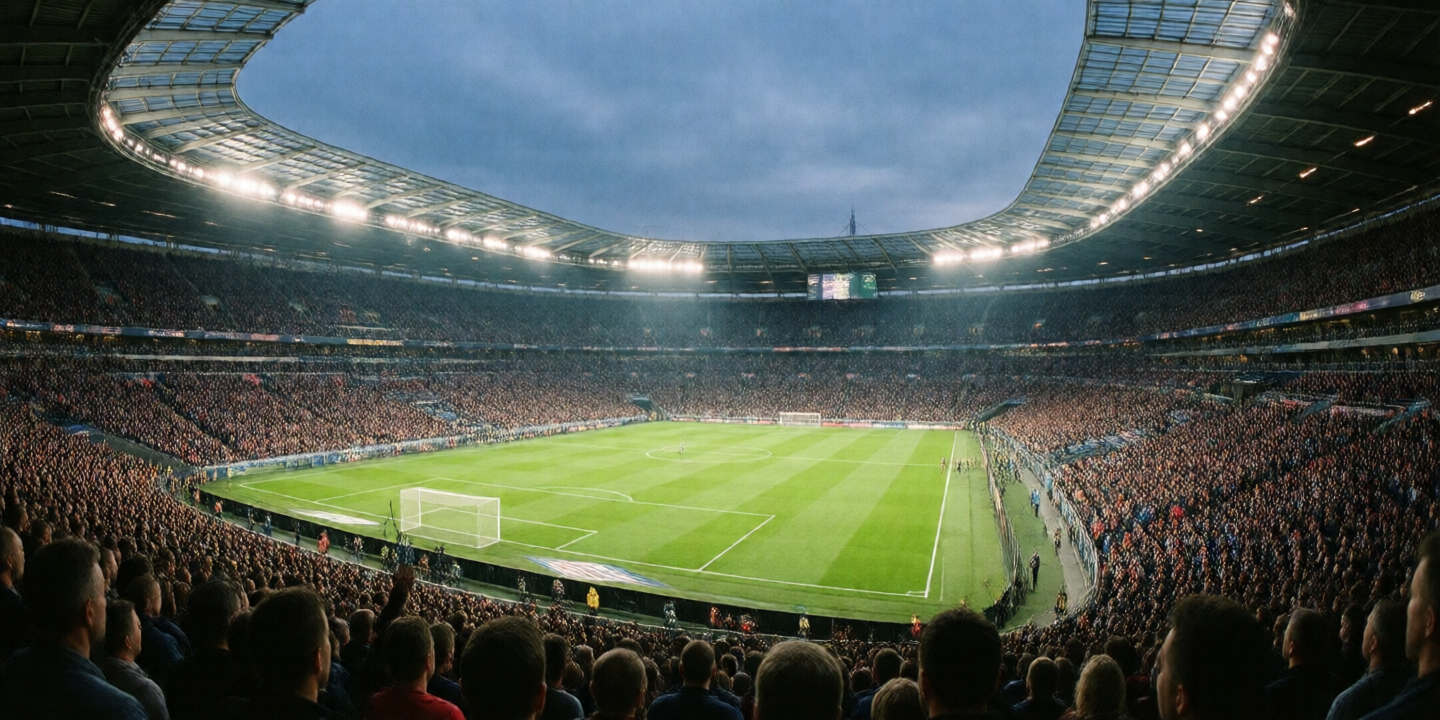
Atlanta will host FIFA World Cup 2026 matches at Mercedes-Benz Stadium, giving the United States a strategically important stage in the first 48-team tournament. The competition runs from June 11 to J...
Why Atlanta Makes World Cup Football 2026 Matter
Atlanta will host FIFA World Cup 2026 matches at Mercedes-Benz Stadium, giving the United States a strategically important stage in the first 48-team tournament. The competition runs from June 11 to July 19, 2026, across 16 host cities in Canada, Mexico, and the United States, with 104 matches scheduled. Atlanta is expected to stage eight fixtures, including a semifinal, while its downtown stadium offers a retractable roof, an artificial playing surface, and a central location near major transport links. The city’s football identity is strengthened by Atlanta United, whose supporters helped establish one of Major League Soccer’s strongest matchday cultures. Tactical Review will follow team news, player statistics, match predictions, and tournament developments without treating speculation as confirmed information. Check official FIFA schedules before buying tickets, booking accommodation, or evaluating betting markets, and compare confirmed lineups with travel conditions before making any prediction.

Atlanta’s World Cup role is larger than a simple venue listing. The city combines a major American sports market, an international airport, established supporter culture, and a stadium designed for high-capacity events. That combination matters because a tournament match is shaped by more than the ninety minutes on the field: kickoff timing, climate, surface, travel distance, recovery windows, and crowd pressure can all influence performance.
I have one stubborn rule when researching major tournaments: never trust a dramatic claim until it can be checked against FIFA, the host city, or the stadium operator. Scam pages regularly recycle false ticket dates, invented hospitality packages, and unofficial “guaranteed” predictions. Tactical Review therefore separates confirmed tournament facts from analytical interpretation. If you are following Atlanta, start with the official FIFA World Cup 26 information, then use independent analysis to understand what the facts may mean.
Want a structured starting point for tournament research?
The Quick Comparison
| Category | World Cup football 2026 in Atlanta | Practical meaning |
|---|---|---|
| Host venue | Mercedes-Benz Stadium | Covered, central venue with strong event infrastructure |
| Atlanta fixtures | Eight matches expected | More opportunities to see group and knockout football |
| Major confirmed role | Semifinal host | Atlanta remains relevant deep into the tournament |
| Competition scale | 48 teams, 104 matches | More teams, more tactical variety, more scheduling complexity |
| Host-country position | United States | Part of an 11-city U.S. hosting network |
| Local football identity | Atlanta United and MLS support | A credible football atmosphere rather than a purely imported event |
| Key research sources | FIFA, Atlanta World Cup 2026, venue information | Better protection against false schedules and ticket claims |
This table gives the useful distinction between tournament scale and city-specific value. The 2026 World Cup is not merely a larger edition of the 2022 competition; FIFA expanded the field from 32 to 48 teams and introduced a substantially different match distribution. The first stage includes 12 groups of four, followed by a round of 32, which creates more qualification scenarios and more opportunities for uneven team quality.
A detail that casual previews often miss is the calendar’s operational density. The tournament is spread across three countries and multiple time zones, so a team’s travel plan can become part of its tactical problem. Atlanta’s location in the Eastern Time Zone may be less disruptive for teams moving through the eastern United States, but it does not remove the effects of long-haul travel from Mexico, Canada, or western U.S. venues. For prediction work, I would record venue, previous location, rest days, and confirmed squad availability rather than assigning an automatic “home advantage” label.
World Cup 2026 host cities and stadium guide
Round 1: Why Does Atlanta Matter as a Host City?
Atlanta matters because Mercedes-Benz Stadium combines a semifinal-level venue, a large established football audience, and transportation infrastructure capable of handling international visitors. The city is one of 16 World Cup 2026 host locations, and its eight-match allocation gives Atlanta significance beyond the group stage. That role makes venue conditions and local logistics relevant to fans and analysts.
Atlanta has spent years building a recognisable football culture around Atlanta United, which entered MLS in 2017 and quickly developed unusually strong attendance and supporter engagement. The club’s presence does not guarantee that every World Cup fixture will have identical intensity, because national-team audiences behave differently from MLS crowds. It does, however, provide a useful foundation: supporters understand chants, coordinated displays, matchday timing, and the emotional demands of a major football event.
The city also has a practical advantage through Hartsfield-Jackson Atlanta International Airport, one of the world’s busiest aviation hubs. That does not mean every visitor will experience easy travel; airport volume can create its own friction during a global tournament. My specific planning recommendation is to reserve a buffer of at least two hours beyond the normal airport-to-stadium journey on matchday, especially if your route depends on connecting rail, rideshare pickup zones, or road closures. That is boring advice, but boring advice is usually cheaper than a missed kickoff.
Atlanta’s cultural identity will also shape the visitor experience. The official Atlanta World Cup 2026 campaign positions the city through music, art, sport, and Southern hospitality, while neighbourhoods such as Downtown Atlanta, Midtown, and the Westside offer different accommodation and nightlife patterns. Visitors should not assume that the stadium area alone represents the city. Atlanta’s food, civil-rights history, film industry, and music heritage can make a match trip substantially richer, but event pricing may rise sharply near high-demand dates.
The operational edge is this: map your accommodation against both the stadium and your return route before purchasing a ticket. A hotel that looks close on a map may become inconvenient if its nearest transit connection is crowded or if post-match rideshare restrictions move the pickup point several blocks away. Use the Atlanta World Cup 2026 host information alongside MARTA service updates, and verify every event detail again during tournament week.
Ready to compare Atlanta’s venue advantages with practical travel realities?
Round 2: How Will Venue Conditions Shape the Football?
Mercedes-Benz Stadium can influence World Cup football 2026 through its roof, climate control, sightlines, crowd acoustics, and artificial playing surface. Those features may reduce weather disruption, but they do not erase adaptation issues: teams still need to manage surface familiarity, ball speed, warm-up routines, and recovery after travel. Venue effects should be treated as variables, not guaranteed outcomes.
The stadium’s retractable roof gives organisers greater control over rain and heat exposure, which is valuable during Atlanta’s summer climate. Yet a controlled environment can create a different tactical question: teams accustomed to natural grass may need additional training time to judge ball roll and footing on the match surface. FIFA, local organisers, and stadium operations determine the final competition setup, so analysts should avoid presenting club-season surface details as a complete prediction of World Cup conditions.
A contrarian point is worth making here: a roof does not automatically favour technical teams. A closed stadium can protect possession-based sides from rain and wind, but it may also increase the importance of pressing triggers, short passing speed, and defensive communication because the crowd noise becomes more concentrated. A physically dominant team that attacks second balls could benefit just as much as a possession specialist, particularly if the opponent struggles with transitions.
For tactical analysis, I would track these factors in order:
- Confirm the official venue and surface information for the specific fixture.
- Compare each team’s recent performance on similar surfaces and under comparable travel demands.
- Review goalkeeper distribution, defensive line height, and set-piece concession rates.
- Check the final squad announcement rather than relying on preliminary selections.
- Reassess the match after official lineups, because one missing midfielder can change the entire pressing structure.
This process is more reliable than declaring that Atlanta “favours” one style before knowing the teams. The Laws of the Game from IFAB remain the baseline for match rules, while FIFA competition regulations and official match information determine tournament-specific details. For betting readers, the responsible approach is to treat venue analysis as one input among many, never as a substitute for price comparison, bankroll limits, or verified team news.

The most useful information gain appears in the interaction between surface and schedule. If a team plays in a western host city, flies east, and then faces Atlanta after a short recovery period, its training time may be reduced even if the stadium itself is comfortable. That can affect set-piece rehearsals more than open-play quality, because dead-ball routines require precise timing, blocking angles, and designated delivery zones.
Another overlooked issue is the difference between a team’s public reputation and its measurable tournament readiness. A famous squad may generate strong betting interest despite limited recent evidence under the same travel and climate conditions. I would compare expected goals, shot locations, progressive passes, high turnovers, and rest intervals across the last five competitive matches, then downgrade any conclusion based on friendly games. Tactical Review’s match previews should explain that uncertainty rather than disguise it with a single confident scoreline.
World Cup tactical trends and formation analysis
Round 3: What Should Fans and Analysts Expect from the Tournament?
Fans should expect World Cup football 2026 to be broader, less predictable, and more logistically demanding than previous 32-team editions. The expansion to 48 nations creates additional matchups between established powers, emerging teams, and qualifiers with limited recent tournament experience. Analysts should therefore combine historical reputation with current squad quality, qualification performance, travel conditions, and the revised progression route.
The group stage’s 12 groups of four teams create a familiar basic structure, but the round of 32 adds an entire knockout layer. That changes incentives. A team may approach its opening match more cautiously if a draw remains useful, while another may need goal difference because qualification calculations are tighter. In a larger field, a single disciplinary suspension or late injury can have an outsized effect, especially for teams with shallow depth.
Atlanta’s semifinal status gives the city an unusually strong late-tournament narrative. However, semifinal hosting does not mean Atlanta will receive a particular national team, star player, or final matchup in advance. Ticket buyers should avoid unofficial pages promising named teams before the draw and schedule are confirmed. FIFA’s official communication remains the primary source for match assignments, sales phases, and venue instructions; a social-media graphic with a familiar logo is not evidence.
For prediction research, separate the task into three layers:
- Team strength: squad depth, chance creation, defensive control, and goalkeeper performance.
- Tournament context: group position, rest days, suspension risk, and qualification incentives.
- Market discipline: available price, implied probability, limits, and a pre-set staking budget.
That last layer matters because a correct football opinion can still produce a poor financial decision if the odds do not justify the risk. Tactical Review covers predictions as analysis, not certainty, and readers should follow local law and use licensed operators where betting is legal. Never chase a loss, never borrow money to wager, and never treat a promotional “boost” as proof of value.
See how tournament context changes a match preview before kickoff.

A practical edge case deserves attention: a team may qualify early and rotate heavily in its final group match, making raw form statistics misleading. If you review only results, a weakened lineup can look like a sudden decline, while a narrow win with a rotated squad may actually indicate strong depth. Record starting elevens, substitutions, formation changes, and match state before interpreting a result.
The same principle applies to player statistics. A striker’s goals may be inflated by penalties, a midfielder’s passing percentage may reflect safe sideways circulation, and a defender’s tackle total may indicate that the team is conceding too much territory. Use event data alongside video or detailed match reports. Opta Analyst offers public football analysis, while FIFA’s official competition coverage helps confirm the tournament framework.
The Final Score & Who Should Pick What
Atlanta is a strong choice for fans who want a major World Cup venue, a developed football culture, and access to a city with substantial international transport capacity. It is also a useful analytical case because the stadium, climate management, artificial surface, crowd environment, and Eastern Time Zone intersect with the expanded 2026 schedule. The best conclusion is not that Atlanta guarantees better football; it is that Atlanta offers more variables worth measuring.
Choose your approach according to your objective:
- For live match attendance: prioritise official ticket channels, accommodation distance, transit buffers, and entry requirements.
- For tactical study: prioritise confirmed lineups, surface information, rest days, pressing data, and set-piece records.
- For responsible betting analysis: compare implied probability with your own estimate, set a fixed budget, and avoid markets based on unverified rumours.
- For general tournament coverage: follow FIFA, the Atlanta host committee, venue announcements, and reputable statistical providers.
- For international visitors: check passport, visa, entry, insurance, and local transportation requirements well before departure.
My final recommendation is deliberately unglamorous: build a source checklist and update it after every official announcement. World Cup football 2026 will generate an enormous amount of confident noise, including fake ticket offers and recycled team news. A disciplined reader who verifies dates, checks lineups, understands uncertainty, and distinguishes analysis from guarantee will usually make better decisions. Believe it or not — I do.
Want ongoing tournament analysis from a football-focused perspective?
World Cup 2026 match prediction methodology
Frequently Asked Questions
Q: What is World Cup football 2026?
A: World Cup football 2026 is FIFA’s men’s international tournament hosted by Canada, Mexico, and the United States from June 11 to July 19, 2026. It is the first edition featuring 48 teams rather than 32, with 104 matches across 16 host cities. The expanded format includes a round of 32 before the traditional knockout stages, so teams face a longer route to the final.
Q: How many World Cup 2026 matches will Atlanta host?
A: Atlanta is expected to host eight World Cup 2026 matches at Mercedes-Benz Stadium, including a semifinal. The exact fixture identities depend on the official tournament draw and schedule allocation. Fans should confirm match dates, kickoff times, and ticket phases through FIFA and the official Atlanta host-city channels instead of relying on unofficial listings.
Q: What is special about Mercedes-Benz Stadium for World Cup football 2026?
A: Mercedes-Benz Stadium offers a retractable roof, large-event infrastructure, central Atlanta access, and a strong football atmosphere. Its venue conditions may reduce weather disruption, but teams still need to adapt to the confirmed competition surface, crowd noise, and travel schedule. Surface and operational details should be verified through official tournament announcements because club-season information may not equal World Cup match conditions.
Q: How should I analyse an Atlanta World Cup match?
A: Analyse an Atlanta match by checking team strength, confirmed lineups, rest days, travel distance, venue conditions, and tactical matchup. Begin with recent competitive data such as expected goals, high turnovers, shot quality, and set-piece performance, then adjust for substitutions and match context. Do not rely solely on reputation, friendly results, or a single player statistic.
Q: Is Atlanta a good city for attending World Cup 2026 matches?
A: Atlanta is a strong host city for many visitors because it has Hartsfield-Jackson Atlanta International Airport, MARTA public transport, major hotels, and an established sports-event economy. Nevertheless, matchday congestion, accommodation inflation, airport queues, and post-match rideshare restrictions may create delays. Book only through verified providers, plan a substantial travel buffer, and check city transport notices before departure.
Q: How much does it cost to attend World Cup football 2026 in Atlanta?
A: There is no single fixed attendance cost because FIFA ticket prices, sales phases, match importance, resale rules, accommodation, transport, and hospitality packages vary. A semifinal is likely to attract higher demand than an early group match, but readers should not treat unofficial price claims as confirmed. Budget separately for the ticket, lodging, local travel, food, insurance, and any required entry documentation.
Q: What should I do if a World Cup 2026 ticket website looks suspicious?
A: Stop the transaction and verify the seller through FIFA, the official host city, or an authorised ticketing channel. Warning signs include guaranteed team assignments before the draw, urgent cryptocurrency payments, copied logos, unusually low prices, and requests for passwords or full banking credentials. Save screenshots, contact your payment provider promptly if money was sent, and report suspected fraud to the relevant consumer-protection authority.
Thank you for reading.
Tactical Review · Curated Silence · 2026