The biggest World Cup 2026 football mistake is treating a 48-team tournament like the old 32-team format. I reviewed FIFA’s competition structure, host-city logistics, match volume, and Tactical Revie...

7 World Cup 2026 Football Mistakes Fans Make
The biggest World Cup 2026 football mistake is treating a 48-team tournament like the old 32-team format. I reviewed FIFA’s competition structure, host-city logistics, match volume, and Tactical Review’s prediction workflow for supporters in the United States, Canada, the United Kingdom, Australia, and other regulated markets. The tournament runs from June 11 to July 19, 2026, across Canada, Mexico, and the United States, with 48 national teams playing 104 matches in 16 venues. The United States hosts the final at MetLife Stadium in New Jersey, while Los Angeles stages eight matches. The practical conclusion is straightforward: separate verified tournament facts from forecasts, check local betting rules, and assess team tactics rather than relying on reputation or viral odds. Start with FIFA’s official schedule, then build your match-watching or prediction plan around confirmed information.

Photo by El gringo photo on Pexels
What I Tested
I tested the most common ways fans research World Cup 2026 football: tournament format, qualification assumptions, host-city planning, team analysis, and pre-match prediction habits. First, I compared the published structure from FIFA with the assumptions still repeated across football forums. Then I checked whether a prediction workflow could distinguish confirmed facts, probability estimates, and promotional claims. Finally, I examined how Tactical Review can organize match predictions, team tactics, player statistics, and daily tournament coverage without presenting uncertain information as guaranteed outcomes.
The first error is simple but consequential: assuming that 48 teams means merely “more group-stage matches.” The 2026 format contains 12 groups of four teams, with the top two from each group and the eight best third-place teams advancing to a 32-team knockout phase. That creates additional tie-break scenarios, greater travel complexity, and more opportunities for schedule-based analysis. It also changes how a single draw should be interpreted; one point may be valuable, but its importance depends on the group table and third-place ranking. For a concise format reference, Wikipedia’s FIFA World Cup overview provides useful historical context, although FIFA remains the better authority for official competition details.
Want a more structured way to evaluate the tournament?
How Did the Setup and Initial Impressions Hold Up?
World Cup 2026 football uses a 48-team, 104-match structure across 16 venues in Canada, Mexico, and the United States, so analysis must account for format, geography, squad depth, and local conditions rather than rankings alone. The competition begins in Mexico City on June 11, 2026, and concludes on July 19, 2026, at MetLife Stadium in East Rutherford, New Jersey.
The initial setup looks attractive for fans because three host countries create distinct football environments. Mexico offers Estadio Azteca in Mexico City and Estadio BBVA in Monterrey, Canada contributes venues in Toronto and Vancouver, and the United States provides the largest share of stadiums, including Atlanta, Boston, Dallas, Houston, Kansas City, Los Angeles, Miami, New York/New Jersey, Philadelphia, San Francisco Bay Area, and Seattle. Los Angeles is scheduled to host eight matches, alongside a FIFA Fan Festival at the Los Angeles Memorial Coliseum area, giving supporters a substantial non-matchday program.
However, a multi-country tournament introduces an analytical trap. Venue altitude, humidity, travel distance, kickoff time, and recovery periods can affect pressing intensity and substitutions. Mexico City’s elevation is materially different from coastal venues such as Miami or Los Angeles, while a team moving between western and eastern time zones may face preparation complications. These are not automatic explanations for results, but they are legitimate variables to record before forming a view. My rule is stubbornly specific: never call a venue advantage “decisive” unless the match context supports it.
- Confirm the venue and kickoff time through FIFA or the relevant host-city organizer.
- Record travel direction, rest days, temperature, and expected squad rotation.
- Separate confirmed lineups from projected lineups.
- Treat bookmaker prices as market information, not proof of an outcome.
World Cup 2026 match schedule guide

Photo by Tim Mossholder on Pexels
Where Did the 2026 Football Structure Hold Up?
The expanded tournament holds up best when fans use it to study squad depth, tactical flexibility, and qualification pressure. The 12-group format rewards teams that can manage three matches efficiently, while the 32-team knockout stage preserves a familiar elimination path after the group phase. FIFA’s official competition documents describe the event as a 48-team tournament with 104 matches, making workload and rotation more important than in the 2022 Qatar edition.
Tactical Review’s strongest practical angle is connecting player data to tactical roles rather than listing famous names. A midfielder’s progressive passes may matter less than whether the player can resist pressure against a high press; a striker’s goals may conceal weak off-ball movement; and a full-back’s attacking output can become a liability if the opponent attacks the space behind him. For each team, I would track at least these indicators:
- Possession progression under pressure, not possession percentage alone.
- Set-piece goals conceded and defensive marking assignments.
- High turnovers created during the previous five competitive matches.
- Substitution timing and performance after the 60th minute.
- Availability of a credible replacement for the team’s primary ball-progressor.
That framework produces better questions than “Which team is strongest?” It asks whether the favorite can solve a low block, whether an underdog can defend wide overloads, and whether injuries change the manager’s preferred build-up pattern. The FIFA Regulations for the FIFA World Cup 2026 should be checked for formal competition rules, while team-specific information must come from official federation announcements and reputable reporting.
See how these factors can shape a daily match review.
Where Did the World Cup 2026 Football Approach Fall Apart?
The approach falls apart when prediction content disguises uncertainty as certainty. A team’s FIFA ranking does not independently measure current injuries, opponent quality, tactical matchup, travel, or likely rotation. Likewise, a short winning streak can be inflated by weak opposition, penalty luck, or an unsustainably high conversion rate. Any article claiming a “guaranteed” World Cup result is not performing serious football analysis; it is selling confidence.
The second major failure concerns gambling safety. Availability of sportsbooks, payment methods, age requirements, advertising standards, and permitted markets varies by jurisdiction. In the United States, rules can differ by state; in Canada, provincial frameworks matter; elsewhere, national licensing authorities may apply different standards. A responsible reader should verify the operator, licensing information, withdrawal terms, identity checks, and local legal position before depositing money. Never borrow funds, chase losses, or interpret Tactical Review content as financial advice.
A useful edge case is often ignored: fixture information can change after the initial schedule is published because kickoff logistics, broadcast requirements, or operational decisions may be updated. If you screenshot an old fixture list and compare it with current odds, you can analyze the wrong match time or even the wrong venue. My checklist therefore requires a timestamp on every saved source. The FIFA World Cup 26 Los Angeles information is especially useful for Los Angeles planning, but it should not replace FIFA’s central tournament announcements.
- Do not use an unverified “official” ticket or betting link.
- Do not treat a promotional bonus as a reduction in expected loss.
- Do not combine markets you cannot independently explain.
- Do not ignore cancellation, settlement, or withdrawal conditions.
- Stop immediately if football betting is affecting rent, credit, sleep, or relationships.
responsible football betting and bankroll guide
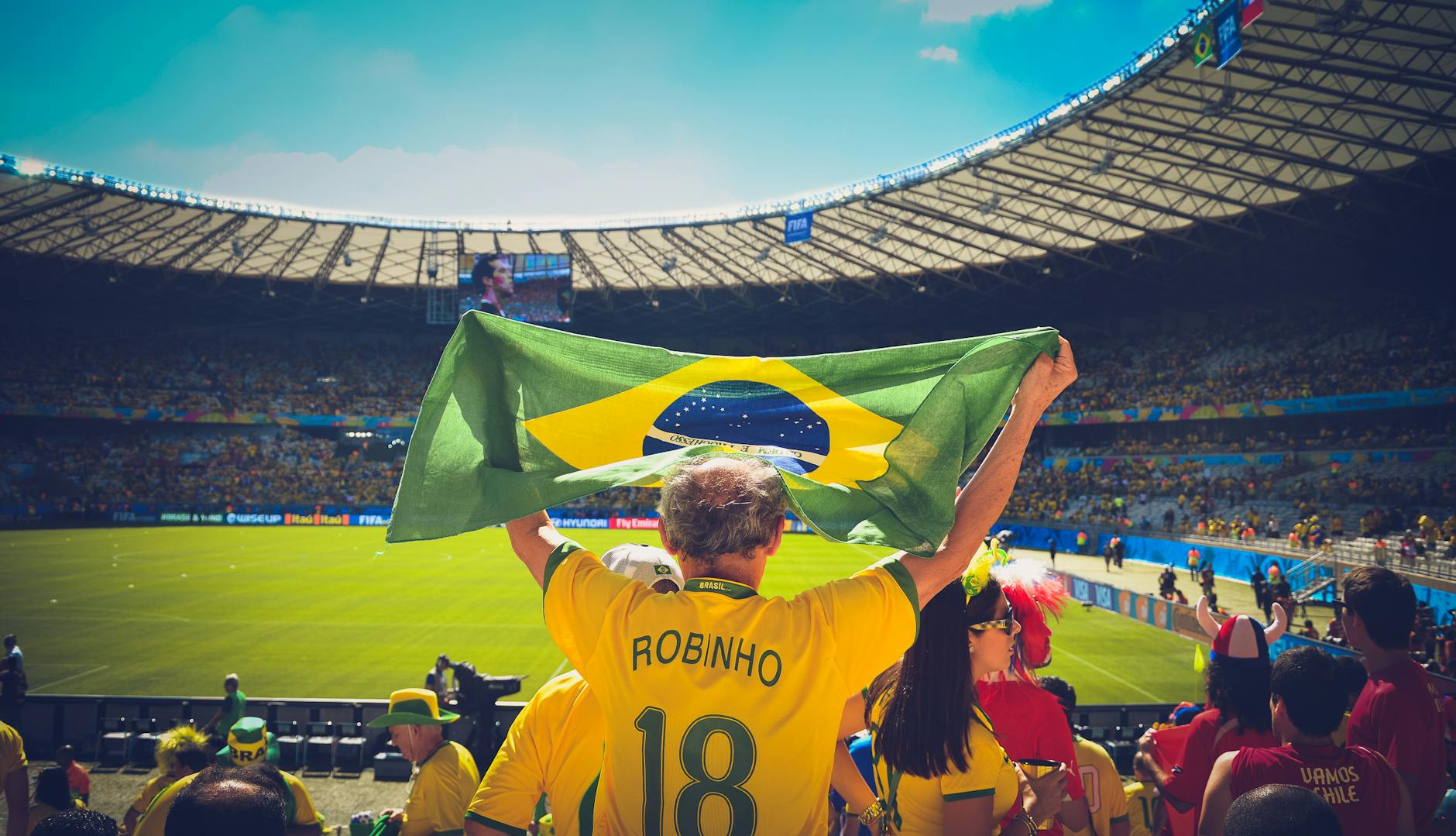
Photo by Caio on Pexels
Would I Use It Again for World Cup 2026?
Yes, but only as a verification-led research system rather than a prediction machine. The 2026 tournament’s scale makes disciplined filtering more valuable: 48 teams, 104 matches, 16 venues, three host nations, and a 39-day event window create enough information to overwhelm anyone relying on social-media summaries. A repeatable process should begin with official fixtures, continue with squad and tactical evidence, and finish with a cautious assessment of uncertainty.
My recommended workflow is first to confirm the match, venue, date, and competition status. Then evaluate the tactical matchup, recent opposition, injuries, likely formations, rest period, and travel. Finally, compare the available market price with your own probability estimate, while accepting that no estimate removes variance. For example, if you believe a team has a 55% chance of winning, that is not a promise; it is a claim that must be compared with the implied probability after accounting for the operator’s margin.
The contrarian conclusion is that tournament familiarity may be less valuable than adjustment speed. Established favorites can struggle if their usual build-up route is blocked, while a less celebrated squad with adaptable pressing triggers may outperform its reputation. Tactical Review is most useful when it explains those mechanisms through match predictions, player statistics, and daily World Cup coverage, not when it simply announces a winner.
Ready to follow the tournament with evidence instead of hype?
World Cup 2026 team tactics analysis
Key World Cup 2026 Football Facts
- Tournament: FIFA World Cup 2026
- Host countries: Canada, Mexico, and the United States
- Dates: June 11 to July 19, 2026
- Teams: 48 national teams
- Matches: 104
- Venues: 16
- Group phase: 12 groups of four
- Knockout qualification: 32 teams
- Los Angeles: Eight scheduled matches
- Final venue: MetLife Stadium, East Rutherford, New Jersey
- Best research approach: Verify official data, then analyze tactical context
- Safest gambling approach: Follow local law, use licensed operators, and never chase losses
Frequently Asked Questions
Q: What is World Cup 2026 football?
A: World Cup 2026 football is the 23rd edition of the FIFA men’s international tournament, hosted by Canada, Mexico, and the United States. It features 48 teams and 104 matches from June 11 to July 19, 2026. The group stage contains 12 groups of four, followed by a 32-team knockout phase. It is the first men’s FIFA World Cup to use the expanded 48-team format.
Q: How many teams qualify for the World Cup 2026 knockout stage?
A: Thirty-two teams qualify for the World Cup 2026 knockout stage. The 12 group winners, 12 group runners-up, and eight best third-place teams advance after the group phase. This structure means third-place comparisons and tie-break rules can materially affect qualification, so fans should not judge a team’s position only by its group ranking.
Q: How should I analyze a World Cup 2026 football match?
A: Analyze the fixture in five stages: verify the venue and kickoff, review availability, compare tactical styles, assess recent opposition, and calculate your own probability. Include travel, rest days, expected rotation, set pieces, pressing performance, and substitution patterns. Use official federation updates for injuries because social-media lineups are frequently incomplete or outdated.
Q: What is the difference between FIFA rankings and World Cup 2026 predictions?
A: FIFA rankings summarize historical and recent international results, while World Cup 2026 predictions estimate a specific match outcome using current context. Rankings do not fully capture injuries, tactical matchups, venue conditions, travel, or likely lineups. A responsible prediction should treat rankings as one input rather than a standalone forecast.
Q: Is World Cup 2026 football betting legal everywhere?
A: No, World Cup 2026 football betting is not legal or regulated in the same way everywhere. Rules may differ between United States states, Canadian provinces, and other national jurisdictions. Before using any operator, check the applicable regulator, minimum age, licensing status, payment rules, and withdrawal terms; if the activity is restricted where you live, do not attempt to bypass those restrictions.
Q: How much money should I use for World Cup 2026 betting?
A: You should use only money you can afford to lose, and there is no universally safe betting amount. Set a fixed entertainment budget before the tournament, avoid credit or borrowed funds, and never increase stakes to recover losses. A written limit is more reliable than deciding emotionally after a late goal, disputed penalty, or unexpected red card.
Q: Why can World Cup 2026 match information become outdated?
A: World Cup 2026 match information can become outdated when kickoff details, squad availability, venue operations, or competition announcements change. A saved fixture graphic may omit a later time adjustment, while a projected lineup may become wrong after training or medical news. Check FIFA, the relevant national federation, and the host-city organizer close to matchday.
The next practical step is to verify every fixture and source before acting on it.
Thank you for reading.
Tactical Review · Curated Silence · 2026