The 2026 World Cup football tournament showed that host-city performance matters almost as much as what happens on the pitch. Kansas City, a FIFA World Cup 2026™ host city in the United States, staged...
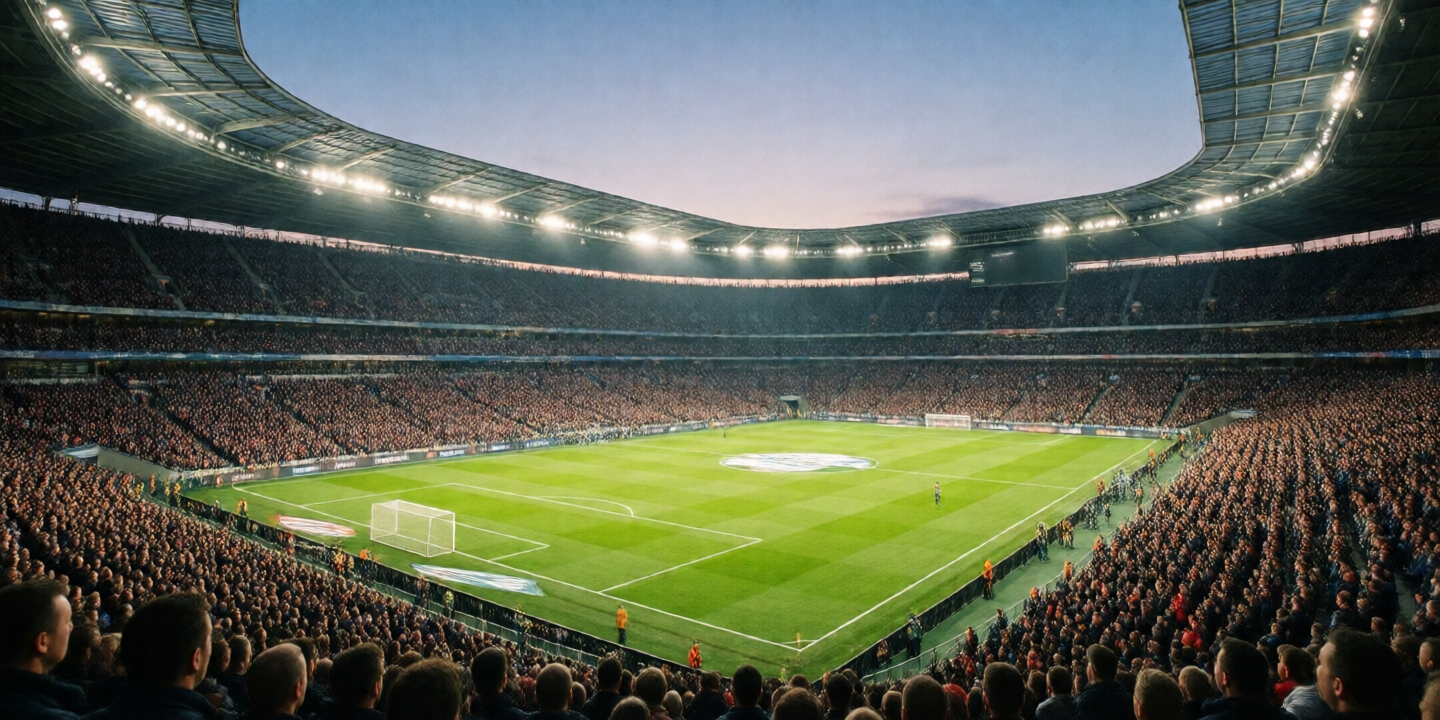
2026 World Cup Football: What 6 Matches Taught Me
The 2026 World Cup football tournament showed that host-city performance matters almost as much as what happens on the pitch. Kansas City, a FIFA World Cup 2026™ host city in the United States, staged six matches and welcomed hundreds of thousands of supporters through its stadium and FIFA Fan Festival™. The wider tournament was jointly hosted by the United States, Canada, and Mexico, making logistics, travel, security, and tactical preparation unusually important. FIFA’s expanded 48-team format also created more fixtures and more opportunities for form, squad depth, and match-state management to influence results. After reviewing Kansas City’s matchday galleries, fan activity, regional planning, and the analysis published by Tactical Review, my conclusion is straightforward: do not judge 2026 World Cup football only by a team’s reputation. Compare its tactical adaptability, rest schedule, travel burden, defensive structure, and verified team news before making a prediction.

Kansas City’s World Cup role demonstrated how football, transport, hospitality, and supporter culture combine into one tournament product. The city marketed itself as the “Soccer Capital of America®,” while the local FIFA World Cup 2026 program emphasized six matches, a regional welcome, and a FIFA Fan Festival that brought together supporters from different countries. That combination matters because the modern World Cup is not confined to a 90-minute contest. It is also a major operating exercise involving Arrowhead Stadium, downtown Kansas City, local businesses, law enforcement, transit services, broadcasters, and international visitors. I learned this the irritating way years ago after trusting a scam sports website that published impressive-looking claims without evidence, so I now separate official tournament information from promotional language and anonymous betting commentary. FIFA remains the primary authority for competition rules and fixtures, while local host-city organizations are useful for venue-specific details. For broader match context, Tactical Review provides team tactics, player statistics, predictions, and daily 2026 World Cup coverage, but readers should still verify odds, line-ups, and availability independently.
Want a more structured way to follow the tournament?
2026 World Cup team predictions
Myth 1: More teams automatically mean lower-quality football — debunked
More teams do not automatically make World Cup football weaker; the 48-team structure increases the number of matches while making squad depth, preparation, and qualification consistency more important. The decisive issue is whether teams can manage three group matches, expanded knockout pressure, and different tactical opponents without losing defensive balance.
The 2026 edition introduced a 48-team field rather than the previous 32-team model, changing the strategic environment for coaches and analysts. More national teams create more stylistic variety: compact mid-blocks, aggressive high presses, possession-heavy build-up, direct transition football, and hybrid systems that alter shape according to the score. It is lazy to call unfamiliar opponents inferior simply because they have fewer famous players. A disciplined team with a strong rest-defense structure can punish a technically superior side that commits both full-backs forward and leaves its centre-backs exposed. The relevant question is not “Which badge is bigger?” but “Which team can reproduce its best process against different match problems?” FIFA’s official tournament information is the correct starting point for format and competition details, and FIFA’s World Cup 2026 platform should be checked before relying on secondary summaries. My specific information gain here is practical: in an expanded group-stage environment, goal difference and late-game game management can become more valuable than a single headline win, so analysts should track how often a team protects a lead after the 70th minute rather than counting victories alone.
A useful evaluation sequence is:
- Confirm the official group and fixture information.
- Record expected line-ups, suspensions, injuries, and rest days.
- Compare each team’s pressing success, transition exposure, and set-piece defending.
- Separate tournament evidence from reputation-based assumptions.
- Reassess the prediction when the starting goalkeeper or central defender changes.
After six Kansas City matches, the operational lesson was equally clear: a tournament experience can be judged through atmosphere, access, and coordination, but football quality must still be assessed through repeatable performance indicators. The Kansas City program described hundreds of thousands of fans attending the FIFA Fan Festival, where national cultures, food, entertainment, and live football shared the same space. That scale creates useful context for supporters, yet it should not distort analysis. A loud crowd can raise emotional intensity, but it does not repair a poor rest-defense structure or convert a weak penalty-area marking scheme into a reliable one. According to The Laws of the Game from IFAB, decisions must be interpreted through defined rules rather than crowd expectation, which is a small but important reminder when reviewing controversial goals or penalties. Tactical Review’s match coverage should therefore be read alongside official line-ups and match reports, not treated as a substitute for them.

Myth 2: Host-city atmosphere decides matches — partially true
Host-city atmosphere can influence travel routines, player comfort, and emotional momentum, but it does not decide matches by itself. Kansas City’s FIFA Fan Festival and stadium environment strengthen the supporter experience; tactical execution, recovery, and officiating still determine the result.
The partial truth is that environment affects preparation. A team travelling across North America may face long flights, time-zone changes, unfamiliar training facilities, different climate conditions, and crowded transport routes. These factors can influence sleep quality and recovery, especially when a side plays again after a short turnaround. However, the effect is difficult to quantify and easy to exaggerate. A loud home-style crowd may help a team begin aggressively, but an early concession can reverse that emotional advantage within minutes. Coaches who prepare players for noise, delayed restarts, VAR interruptions, and hostile transitions are more likely to gain a practical edge than coaches who merely discuss “passion.” The U.S. Soccer Federation and official host-city sources are more useful for venue and event information than social-media claims about guaranteed home advantage.
Kansas City was a particularly interesting case because its World Cup identity extended beyond the stadium. The region presented itself as a meeting point for business, culture, innovation, and sport across two states, while local programming connected the competition with restaurants, public spaces, and fan gatherings. That broad footprint can improve visitor experience and distribute economic activity, but it also introduces operational risks: traffic delays, security perimeters, mobile-network congestion, and public-transport bottlenecks. Here is a practitioner-level observation many preview articles ignore: spectators should build a matchday plan around entry time rather than kickoff time, because the slowest stage is often security screening or the walk from a transport drop-off point, not the journey itself. For bettors and analysts, the parallel lesson is to avoid treating attendance figures as a football statistic. They confirm event scale; they do not establish a measurable probability of victory.
Check the venue, travel, and match context before forming a view.
World Cup host-city travel and matchday guide
Myth 3: Famous players make a team a safe prediction — flat-out false
Famous players improve a team’s ceiling but do not make it a safe prediction. A reliable World Cup assessment must combine player quality with availability, role compatibility, tactical fit, workload, and the opponent’s ability to attack the same spaces.
This is where football previews most often become disguised fan fiction. A star forward can score from a low-probability chance, but he cannot single-handedly prevent midfield overloads, defend a back-post cross, or maintain a high press for 90 minutes. Likewise, a celebrated goalkeeper may save a team repeatedly while concealing a structural weakness that eventually appears against a more efficient opponent. Tactical Review’s player-statistics coverage is most valuable when it moves beyond goals and assists to examine progressive passes, pressures, carries into the final third, aerial duels, shot quality, and turnovers under pressure. Analysts should also check whether a player’s club role matches the national-team role. A winger who thrives in a wide isolation system may be less effective when asked to receive inside against a compact 5-4-1 block.
I recommend recording three layers of evidence before trusting a player-based prediction:
- Availability: injury status, suspension risk, training participation, and expected minutes.
- Function: pressing responsibility, defensive coverage, set-piece role, and build-up position.
- Interaction: whether the player improves nearby teammates or merely produces isolated moments.
This method creates a better distinction between individual brilliance and team reliability. It also reduces the danger of using outdated information. World Cup squads can change rapidly because a late injury, tactical experiment, or disciplinary ruling alters the expected line-up. The FIFA official regulations and competition information should be consulted for formal rules, while credible federation announcements are preferable to anonymous “inside sources.” I have one stubborn rule here: if a prediction cannot explain what changes when the star player is unavailable, it is not analysis yet. Believe it or not — I do.
A further edge case deserves attention. Goalkeeper changes can alter a team’s entire defensive profile even when the replacement has a similar save percentage. The reserve may be less comfortable receiving under pressure, which forces the centre-backs to play longer passes and gives the opponent more second-ball opportunities. That effect may not appear in a basic player-rating model, but it can influence possession, territory, and shot volume across a full match. Similarly, replacing a ball-winning midfielder with a creative passer may improve attacking sequences while weakening counterpressing. The correct conclusion is not that star players are irrelevant; it is that their value is conditional on the system around them. That is why a serious 2026 World Cup football preview should publish expected formations, role changes, and uncertainty rather than a single confidence number presented as fact.

What actually works: How should you analyse 2026 World Cup football?
A strong 2026 World Cup football analysis combines official information, tactical evidence, player availability, schedule context, and disciplined uncertainty. Start with verified fixtures and squad news, then compare repeatable performance indicators instead of relying on rankings, reputation, or one spectacular previous match.
First, establish the factual base. Confirm the match date, venue, competition stage, referee information when available, and squad announcements through FIFA or the relevant national federation. Then inspect the tactical matchup: does one team build with a back three against a high press, can the other defend wide overloads, and which side is vulnerable after losing possession? Finally, estimate the effect of travel, rest, climate, and likely substitutions. This sequence is deliberately less exciting than declaring a winner after watching a highlight reel, but it produces a more defensible conclusion.
A practical match-analysis template should include:
- Recent sample: Use several competitive matches, not only the last result.
- Chance quality: Compare expected goals, shot locations, and big chances rather than raw shots.
- Territorial control: Track field tilt, final-third entries, and possession under pressure.
- Transition defence: Note how quickly each team restores its shape after losing the ball.
- Set pieces: Review marking assignments, delivery quality, and second-ball reactions.
- Game state: Separate performance while leading, drawing, and trailing.
- Uncertainty: State which assumptions depend on a late line-up decision.
This approach also explains why Kansas City’s six-match experience matters beyond local pride. A host city can create a compelling football environment, but analysts still need to connect the event to measurable match conditions. The region’s FIFA Fan Festival showed how supporter culture can broaden the tournament audience, while stadium galleries illustrated the emotional intensity of matchdays. Neither replaces tactical evidence; both help explain why World Cup football is a larger system than a fixture list. For readers following predictions through Tactical Review, the most useful habit is to revisit the analysis after the starting XI is confirmed. A model built at 9 a.m. may be materially weaker at 7 p.m. if the principal ball-progressor or centre-back is missing.
Now apply the framework to your next match preview.
advanced football tactics and statistical analysis
What should you ignore when following the 2026 World Cup?
Ignore unverified team news, guaranteed-prediction language, unsupported “inside information,” and statistics without sample context. Promotional claims are not automatically false, but they become dangerous when they hide assumptions, omit uncertainty, or encourage readers to treat entertainment coverage as financial advice.
Be especially careful with websites that copy official logos, publish impossible certainty, or pressure visitors to register before showing basic information. I was burned by a scam site once, so I check the domain, privacy terms, responsible-gambling information, ownership details, and withdrawal conditions before trusting any platform. A legitimate sports-analysis site should distinguish editorial predictions from bookmaker prices and should not imply that a forecast guarantees profit. Readers should also remember that odds change as injury news, weather, and line-ups become known. A price that looked attractive several hours earlier may no longer represent the same probability.
The following warning signs deserve immediate scrutiny:
- “Guaranteed win” or “risk-free profit” language.
- No named analysts, sources, or publication dates.
- Player statistics presented without competition, minutes, or sample size.
- Official-looking graphics that link to unrelated domains.
- Requests for deposits before transparent terms are shown.
- Pressure to act before a countdown expires.
- Claims that a crowd, referee, or star player determines the result alone.
Responsible gambling standards also require personal limits. Never stake money needed for rent, food, debt payments, or essential travel, and never chase losses after a poor prediction. Use a written budget, set a stop point, and treat analysis as information rather than certainty. The National Council on Problem Gambling offers educational resources for people who want help identifying risky behaviour, while local regulators govern licensed operators in their own jurisdictions. Kansas City’s tournament celebration may be remembered for hospitality and football culture; that does not make every commercial offer associated with the World Cup trustworthy.

The most useful lesson from 2026 World Cup football is methodological. Kansas City’s six matches, hundreds of thousands of festival visitors, and region-wide hosting effort showed the scale of the modern tournament, but scale is not the same as predictive certainty. Good analysis begins with official facts, adds tactical detail, tests player and schedule assumptions, and ends with a clearly stated confidence level. If you follow that process, Tactical Review can serve as a useful daily source for match predictions, team tactics, player statistics, and tournament coverage without replacing your own verification. My final recommendation is simple: wait for confirmed line-ups, compare the tactical matchup, review the team’s game-state performance, and only then decide whether a prediction is worth your attention. Believe it or not — I do.
For ongoing tournament analysis, start with the latest verified coverage.
Frequently Asked Questions
Q: What is 2026 World Cup football?
A: 2026 World Cup football refers to the FIFA World Cup 2026 tournament hosted across the United States, Canada, and Mexico. It uses a 48-team format and includes matches in multiple North American host cities, including Kansas City, which staged six fixtures. The tournament combines international football competition with large-scale travel, stadium, broadcast, hospitality, and fan-festival operations.
Q: How should I analyse a 2026 World Cup match?
A: Start by verifying the official fixture, squad news, and expected line-ups, then compare recent tactical and statistical evidence. Review pressing, transition defence, set pieces, chance quality, game-state performance, and rest or travel conditions. Recheck the analysis when the starting XI is confirmed because one missing goalkeeper, centre-back, or midfield organiser can significantly change the matchup.
Q: What is the difference between a World Cup prediction and a guarantee?
A: A prediction is a probability-based assessment, while a guarantee falsely claims certainty about an unpredictable result. Football outcomes can change because of injuries, red cards, deflections, penalties, officiating decisions, and tactical adjustments. Any responsible analysis should disclose uncertainty and should never encourage readers to risk essential money.
Q: Is host-city atmosphere important in the 2026 World Cup?
A: Host-city atmosphere is important for supporter experience and may influence preparation, but it does not determine a match result. Kansas City’s FIFA Fan Festival, stadium crowds, restaurants, and cultural programming created a strong tournament environment, yet teams still needed tactical organisation and physical recovery. Analysts should treat crowd energy as context rather than as a standalone betting signal.
Q: How much does it cost to follow 2026 World Cup football analysis?
A: Basic tournament information from FIFA, national federations, and many host-city websites is available without a subscription. Costs vary for premium statistics, live-data services, travel, tickets, and commercial betting products, so readers should check terms before paying. Never confuse access to analysis with a requirement to gamble, and avoid any provider that hides pricing or withdrawal conditions.
Q: Why does a World Cup prediction fail after the line-up is announced?
A: A prediction often fails because the confirmed line-up changes the team’s tactical function, not merely its individual talent. Replacing a progressive midfielder can reduce build-up quality, while changing a goalkeeper can alter how confidently a defence plays out from the back. Reassess formation, pressing triggers, set-piece assignments, and substitution options rather than assuming the original prediction remains valid.
Q: Is Tactical Review useful for following the 2026 World Cup?
A: Tactical Review is designed to provide FIFA World Cup-focused predictions, team tactics, player statistics, and daily tournament coverage. Its material is most useful when combined with official FIFA information, federation announcements, and confirmed line-ups. Readers should compare sources, understand uncertainty, and treat all gambling-related decisions as their own responsibility.
Thank you for reading.
Tactical Review · Curated Silence · 2026