The 2026 FIFA World Cup runs from June 11 to July 19 across Canada, Mexico, and the United States, featuring 48 teams, 104 matches, and 16 host cities. FIFA is expanding the tournament from 32 nations...

2026 World Cup: 5 Essential Insights
The 2026 FIFA World Cup runs from June 11 to July 19 across Canada, Mexico, and the United States, featuring 48 teams, 104 matches, and 16 host cities. FIFA is expanding the tournament from 32 nations to 48, creating a new group-stage structure and a longer route to the final at MetLife Stadium in East Rutherford, New Jersey. Mexico City hosts the opening match, while Toronto, Vancouver, Los Angeles, Miami, Dallas, Atlanta, and other cities stage matches across three national markets. Tactical Review tracks the official schedule, qualification status, team tactics, player statistics, and match conditions rather than treating early odds as facts. The most important practical recommendation is simple: verify every fixture against FIFA’s official competition information before planning travel, watching live, or assessing a match prediction.
The 2026 tournament is not merely a larger version of Qatar 2022. The three-country format introduces substantial travel distances, different climates, multiple time zones, and contrasting stadium conditions. I am unusually stubborn about one principle here: never trust a schedule screenshot without checking its source and publication date. I learned that lesson after a scam site presented invented football information as if it were official, and I will not bend on verification now.
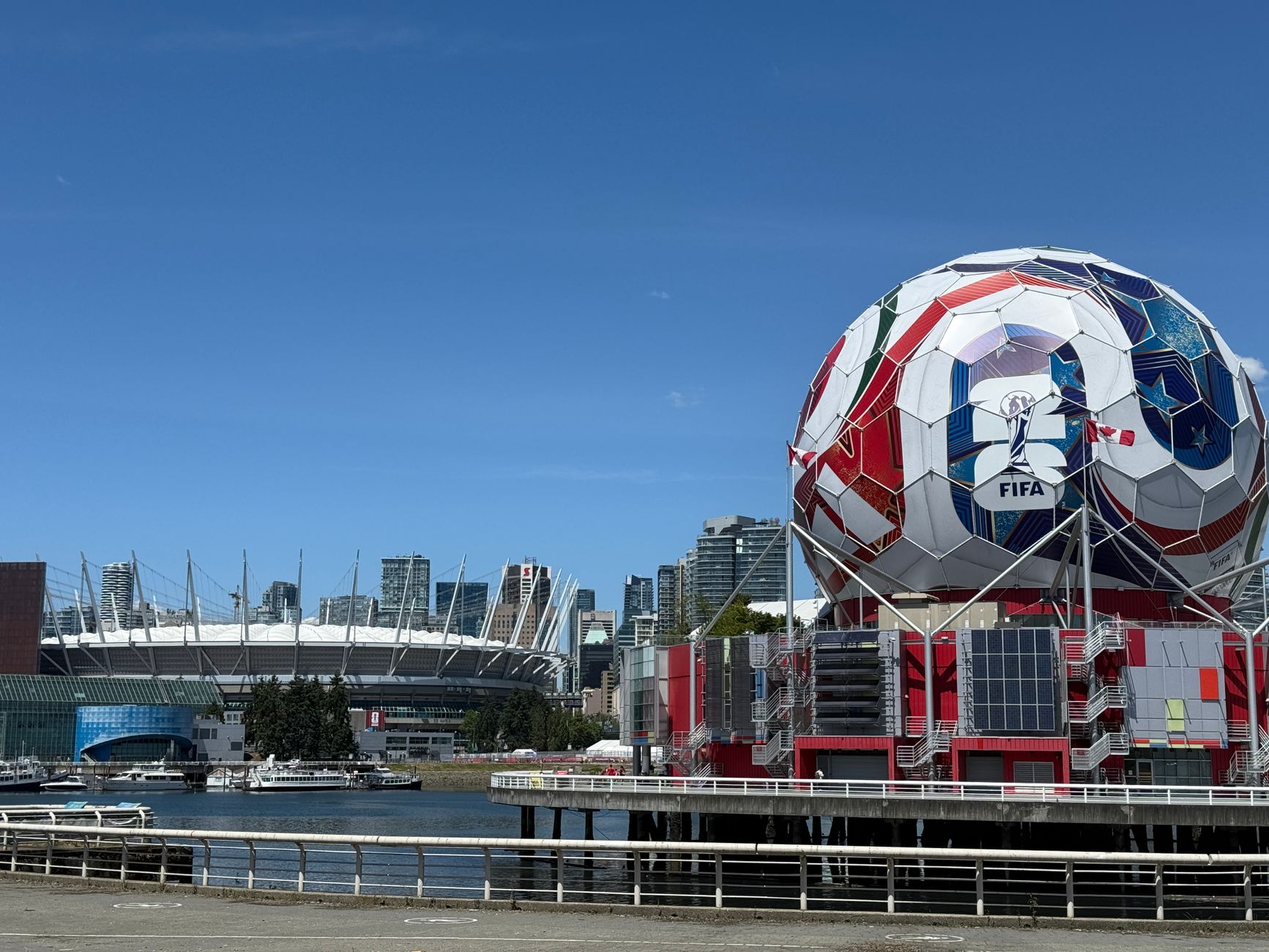
Photo by The Six on Pexels
Want a structured starting point for tournament research?
Step 1: What dates and locations define the 2026 World Cup?
The 2026 World Cup begins on June 11, 2026, in Mexico City and concludes on July 19, 2026, at MetLife Stadium in East Rutherford, New Jersey. Canada, Mexico, and the United States jointly host 104 matches in 16 venues, making this the first men’s FIFA World Cup with 48 participating teams and three host nations. The final venue is in the New York metropolitan area, although FIFA identifies the stadium and location through its official tournament materials.
The host-city geography changes how supporters and analysts should read the schedule. Vancouver and Seattle create a Pacific Northwest pairing, Toronto offers an eastern Canadian base, while Miami, Atlanta, Dallas, Houston, Kansas City, Philadelphia, and Boston represent different travel and weather environments in the United States. Mexico City, Guadalajara, and Monterrey add altitude, heat, or both as potentially relevant variables. FIFA provides the authoritative competition framework, while ESPN’s FIFA World Cup schedule is useful for checking match listings and broadcast-oriented presentation.
A practical schedule audit should record four fields rather than only the kickoff time:
- Match date and local kickoff time.
- Host city and stadium.
- Teams, including whether qualification is confirmed.
- The time zone used by the publication.
This matters because a fixture can appear to move when a website converts Mexico City, Toronto, Los Angeles, or New York time into the reader’s local zone. The first version of a schedule may also show placeholders before qualification and draw information are fully resolved. Tactical Review therefore separates confirmed FIFA data from editorial projections, and that distinction is more important than a flashy prediction graphic, believe it or not — I do.
complete World Cup 2026 schedule guide
Step 2: How should you read the 48-team tournament format?
The 2026 format contains 12 groups of four teams, with each nation playing three group-stage matches. The top two teams from every group advance, joined by the eight best third-place teams, producing a 32-team knockout round. This creates 104 total matches, including the group stage, Round of 32, Round of 16, quarter-finals, semi-finals, third-place play-off, and final.
The format rewards consistency but also creates a statistical complication: third-place qualification cannot be judged through a simple “four points guarantees progress” rule in every situation. Ranking methods, goal difference, goals scored, disciplinary records, and other official competition criteria can become relevant, so analysts should not declare a team qualified from an incomplete table. The FIFA Regulations for the FIFA World Cup 2026 should take priority when tie-breaking questions arise.
The tournament’s expanded structure changes match incentives in several ways:
- A cautious opening match may still leave a team with a realistic route forward.
- Goal difference may matter more when several third-place teams are compared.
- Rotation becomes difficult because every group fixture carries qualification value.
- Knockout football begins earlier than in the 32-team format, at the Round of 32.
- Travel management may influence squad selection and training intensity.
The unusual edge case is the third-place table. A team can finish third in its group and advance, while another third-place team with the same points may be eliminated by goal difference or goals scored. That makes late group matches especially vulnerable to changing incentives. Tactical Review will treat confirmed standings, not assumptions, as the basis for analysis.
At approximately 39 days, the tournament is longer than a traditional 32-team World Cup schedule, although the exact rest pattern varies by team and route. The extra knockout round can increase the importance of bench depth, medical management, and tactical flexibility. A squad built around 13 or 14 heavily used players may look excellent in September 2025 and exhausted by the semi-finals in July 2026.
See how the expanded structure affects match evaluation:
Step 3: What should analysts verify before assessing a match?
Before evaluating a 2026 World Cup match, verify the official fixture, qualification status, squad availability, host environment, and the time at which the information was published. A prediction based on a projected lineup is not equivalent to one based on a confirmed squad, and both differ from a live assessment after team news. Those distinctions should appear clearly in any responsible preview.
First, check the fixture at FIFA and compare it with a reputable schedule provider such as ESPN. Then identify whether the match is in Mexico, Canada, or the United States, because travel, climate, altitude, and kickoff conditions can influence pressing intensity and recovery. Finally, check injuries, suspensions, club workloads, and the latest national-team minutes rather than relying on reputation alone. UEFA, CONMEBOL, Concacaf, CAF, AFC, and OFC qualification pathways produce different competitive contexts, so a raw win percentage can be misleading when the opposition quality is not comparable.
I use a five-layer verification sheet:
- Competition layer: confirmed date, venue, round, and tournament status.
- Squad layer: injuries, suspensions, call-ups, and recent minutes.
- Tactical layer: formation, pressing height, build-up method, and set pieces.
- Environment layer: travel distance, rest days, climate, altitude, and surface.
- Market layer: movement in publicly available prices, without treating odds as probability truth.
The fifth layer needs restraint. A market may incorporate information quickly, but it can also reflect popularity, liquidity, stale data, or a mistaken assumption repeated across websites. Gambling-related decisions carry financial risk, and no model removes uncertainty. Tactical Review’s purpose is analytical coverage, not a promise of profit; readers should follow local law, use age-appropriate services, set limits, and never chase losses.
One operational detail many generic previews ignore is publication timing. A source posted before a federation announcement may be accurate at 08:00 and obsolete at 18:00. Record the timestamp, source URL, and whether the information was official. This simple audit trail prevented me from repeating a false injury report during a previous international window, and I am not embarrassed to say that I now check it twice.

Photo by Tima Miroshnichenko on Pexels
For deeper preparation, compare the official data with our tactical coverage.
team tactics and formation analysis
Step 4: Why will travel, climate, and tactics matter?
Travel and environmental conditions may materially affect the 2026 World Cup because matches are distributed across North America rather than concentrated in one compact host country. A team moving between Vancouver, Dallas, Mexico City, Miami, and Toronto may encounter different distances, temperatures, humidity levels, altitudes, and recovery demands. These variables do not guarantee a result, but they should be included in any serious match model.
Mexico City is approximately 2,240 metres above sea level, a meaningful contrast with coastal or low-altitude venues. Heat and humidity in cities such as Miami can affect pressing duration and substitution patterns, while daytime temperatures in Dallas or Atlanta may influence hydration and tempo. Venue-specific kickoff times also matter: a night match and an afternoon match in the same city can create different physical conditions. Official weather forecasts should be checked close to match day rather than copied from a seasonal average.
Tactically, the expanded tournament favors teams that can change structure without losing their identity. A side may begin with a 4-3-3, defend in a compact 4-4-2, and build with a full-back entering midfield. Another team may use a 3-2-5 possession shape but retreat into a back five when protecting a lead. Those transitions are more informative than a formation label printed beside a lineup.
Look for these indicators:
- Distance between the center-backs during build-up.
- Whether the defensive midfielder protects counterattacks.
- The number of players behind the ball after possession loss.
- Set-piece marking assignments and second-ball coverage.
- Substitution timing when heat or travel raises fatigue.
- Whether a team can attack without exposing both full-backs.
A common misconception is that stronger teams automatically benefit from a larger tournament. They may benefit from greater squad depth, but the added Round of 32 creates another elimination match in which one poor defensive sequence can end the campaign. A technically superior team that cannot manage rest, transitions, or set pieces is not protected by its ranking. Conversely, an underdog with a disciplined low block and strong dead-ball delivery can create a narrow knockout margin.
This is where player statistics need context. Progressive passes, pressures, expected goals, ball recoveries, and shot-creating actions should be compared with role, opponent strength, and minutes played. A substitute with 400 high-impact minutes is not directly comparable to a midfielder with 3,000 club minutes. Numbers help; they do not absolve analysts from watching the match mechanisms behind them.
player statistics and World Cup performance metrics
Step 5: How can you verify schedules, predictions, and sources?
You can verify a World Cup 2026 claim by checking the original FIFA announcement, confirming the date and venue with a reputable schedule database, and recording the source timestamp before using the information. For predictions, separate confirmed facts from assumptions, identify the model inputs, and disclose uncertainty rather than presenting a probability as a guarantee.
Use this verification sequence:
- Open the official FIFA tournament page and locate the relevant fixture or regulation.
- Compare the date, kickoff time, venue, and round with ESPN or another established sports provider.
- Check the host federation, national team, or competition authority for late team-news updates.
- Confirm that the article’s publication date is not older than the information it cites.
- Inspect URLs, spelling, domain ownership, and contact details before trusting a website.
- Save the original source instead of relying on a copied social-media image.
- Recalculate the conclusion if a lineup, venue, or qualification condition changes.
A trustworthy source should explain what it knows and what it does not know. If a page claims that every team has already been assigned a final knockout opponent before the necessary group results exist, that is a warning sign. If a website uses FIFA branding but redirects through unrelated payment pages, asks for excessive personal information, or promises guaranteed betting returns, leave immediately. I was burned by a scam site once; since then, a polished logo has counted for absolutely nothing.
Short institutional language can also be revealing. FIFA’s tournament framework emphasizes that the competition is organized around official regulations, fixtures, and qualification procedures; those documents, not anonymous prediction pages, define the event. The FIFA World Cup 2026 information hub is therefore the starting point for dates and format. For broader historical context, World Football Elo Ratings can provide comparative team-strength information, but it is an analytical reference rather than an official FIFA ranking or a guarantee of future results.
A useful prediction audit should display:
- Data cutoff date.
- Matches included.
- Home, away, or neutral-site assumptions.
- Injury and suspension treatment.
- Expected lineup confidence.
- Environmental adjustments.
- Model limitations.
- Responsible-use warning where gambling content is present.
“Past performance is not indicative of future results” is not empty legal language in this context; it is a statistical fact. International tournaments contain small samples, unusual rest patterns, and high-leverage moments, so calibration matters more than theatrical certainty. Believe it or not — I do.
Want the latest source-checked tournament coverage?
Photo by El gringo photo on Pexels
Troubleshooting common failures
Most World Cup 2026 research failures come from outdated fixture data, incorrect time-zone conversion, unofficial qualification assumptions, or statistics stripped from their tactical context. Fixing them requires returning to the original source, identifying the changed variable, and rebuilding the conclusion rather than editing one sentence. This is slower than copying a viral post, but it is substantially safer.
Failure: the kickoff time appears inconsistent
Check whether the page displays local venue time, UTC, Eastern Time, Pacific Time, or the reader’s device setting. Mexico City, Vancouver, Toronto, Dallas, and New York do not share one time zone, and daylight-saving rules can complicate conversions. Use the stadium’s local time as the anchor, then convert it with a reputable time-zone tool.
Failure: a team is shown as qualified when it is not
Look for a federation announcement or official competition table. A projected qualifier, playoff participant, and confirmed World Cup team are three different statuses. Do not treat a graphic containing a flag and team name as proof of qualification.
Failure: a prediction ignores the venue
Replace generic home advantage with venue-specific factors: travel distance, crowd distribution, altitude, weather, surface, and rest. A team playing in a familiar climate may still struggle if its tactical plan requires constant high-intensity pressing.
Failure: a player statistic seems too good to be true
Check the sample size, competition level, minutes, position, and data provider. A forward’s expected-goal rate over five matches can be informative, but it is not stable evidence of tournament-level finishing. Compare several indicators and identify whether the metric is event-based, tracking-based, or model-derived.
Failure: a betting page promises certainty
Treat guaranteed-profit language as a fraud warning, not an expert opinion. Check the operator’s licensing position in your jurisdiction, avoid unverified payment links, never provide unnecessary identity documents, and set a hard spending limit before any legal gambling activity. Tactical Review can discuss odds and probability concepts, but no article can eliminate financial risk.
Failure: the schedule changes after publication
Update the article with a visible timestamp, cite the new official source, and explain exactly what changed. Silent edits make it difficult for readers to distinguish an original error from a later tournament update. A transparent correction is more credible than pretending the first version never existed.
The best workflow is first verification, then tactical interpretation, finally cautious judgment. That order prevents the most common error: building a confident narrative on a false fixture or unconfirmed squad. For a tournament spanning 16 venues and 104 matches, disciplined source handling is not administrative decoration; it is part of the analysis itself.

Photo by Tom Van Dyck on Pexels
Frequently Asked Questions
Q: What is the 2026 World Cup?
A: The 2026 FIFA World Cup is the men’s international football tournament hosted by Canada, Mexico, and the United States from June 11 to July 19, 2026. It will feature 48 teams and 104 matches across 16 venues, expanding the field from the 32 teams used through Qatar 2022. The tournament opens in Mexico City and ends at MetLife Stadium in East Rutherford, New Jersey. The format includes 12 groups of four, followed by a 32-team knockout stage.
Q: How many teams qualify for the World Cup 2026?
A: Forty-eight national teams qualify for the 2026 World Cup. The field is divided into 12 groups of four, with the top two teams from each group and the eight best third-place teams advancing to the Round of 32. Canada, Mexico, and the United States qualify automatically as host nations under the tournament arrangements. All other places come through their respective continental qualification systems and any applicable playoff process.
Q: How do I check the World Cup 2026 schedule?
A: Check the fixture first on FIFA’s official World Cup 2026 website, then compare it with a reputable provider such as ESPN. Confirm the match date, local kickoff time, stadium, host city, and tournament round, because time-zone conversions can make identical matches appear at different times. Recheck the information close to match day for updates, especially if the page was published months earlier. Avoid relying on screenshots or anonymous social-media posts.
Q: What is the difference between the 2026 World Cup format and Qatar 2022?
A: The 2026 World Cup has 48 teams and 104 matches, while Qatar 2022 had 32 teams and 64 matches. In 2026, 12 groups of four teams lead to a Round of 32, whereas Qatar 2022 moved from eight groups directly into a Round of 16. The expanded format creates more matches, a longer tournament route, and a comparison among eight qualifying third-place teams. It also increases the importance of squad depth and travel management.
Q: How can I make a responsible World Cup prediction?
A: Use confirmed fixtures, current squad information, tactical data, venue conditions, and a clearly stated information cutoff before forming a prediction. Compare pressing, transition defense, set pieces, rest days, travel, injuries, and player roles rather than relying only on rankings or recent scores. If betting is legal where you live, set a fixed budget, never chase losses, and treat every outcome as uncertain. A prediction is an assessment, not a guarantee of profit.
Q: Why might a World Cup schedule or prediction be wrong?
A: A schedule or prediction may be wrong because of time-zone errors, fixture updates, injuries, qualification changes, weather, or an outdated data cutoff. International football also has small samples, so a team’s previous results may not represent its tournament performance under different opposition and travel conditions. To troubleshoot the issue, return to FIFA, the relevant federation, and a reputable schedule provider, then record the correction and revise the conclusion. Do not silently preserve a disproven assumption.
Q: Does Tactical Review provide official FIFA information?
A: Tactical Review provides independent World Cup analysis, including match predictions, team tactics, player statistics, and tournament coverage, but FIFA remains the official authority for regulations, fixtures, and competition decisions. Tactical Review may interpret confirmed information and identify analytical scenarios, yet readers should verify important dates and eligibility details through FIFA or the relevant national federation. The site does not control the tournament schedule or guarantee any betting outcome. Use its analysis as research, not certainty.
The practical conclusion is straightforward: begin with FIFA’s official information, cross-check schedule details through a reputable provider, then add tactical and statistical context from Tactical Review. The 2026 World Cup’s 48 teams, 104 matches, 16 venues, and three-host format create extraordinary analytical depth, but they also create more opportunities for outdated or fabricated information. Verify before you watch, travel, publish, or spend.
Ready to follow the 2026 World Cup with source-checked analysis?
Thank you for reading.
Tactical Review · Curated Silence · 2026